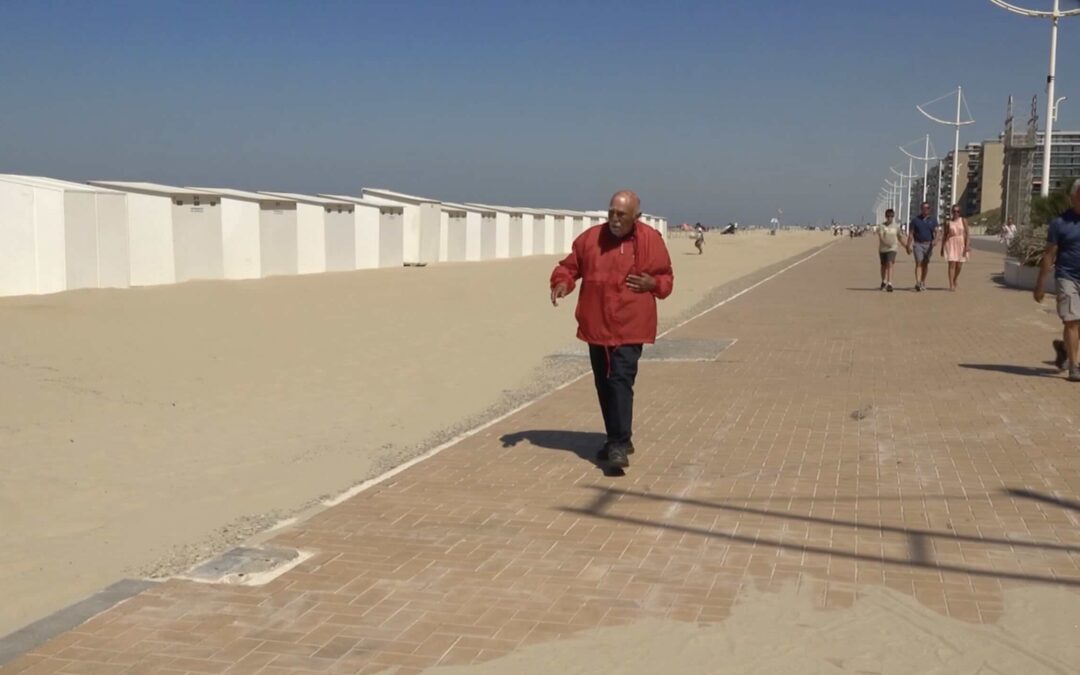
The glowing reviews from audiences and film critics keep coming for the film by Stelios Kouloglou. Among others, Ninos Fenek Mikelidis and Lambriana Kyriakou have written about it.
Screenings of the award-winning documentary continue at Cinobo Opera, the Greek Film Archive (Tainiothiki) and Cineak in Piraeus.
Ninos Fenek Mikelidis writes:
Among the most interesting films of the week, the excellent and timely documentary “Born Twice” by Stelios Kouloglou (“142 Years”, “Neo-Nazis: The Holocaust of Memory”) deserves a special mention.
A film about memory and forgiveness, told through the unlikely yet so necessary friendship between two men, both “victims of the war”, as Simon Gronowski puts it – the 94-year-old Jewish lawyer, Holocaust survivor and protagonist of the documentary. In 1943, when the Nazis deported his family, together with thousands of Belgian Jews, to Auschwitz, his mother helped him jump from the train and escape.
Eighty-three years later, Simon still practises law, defending the vulnerable, gives concerts with his own jazz band and speaks every week at schools and in communities about democracy and the danger of the far right. In one scene he even addresses the current situation in the Middle East, accusing Netanyahu – a criminal, as he openly states – of a policy of genocide in Gaza, while expressing his belief that Jews and Palestinians “can be reconciled and live in peace” one day.
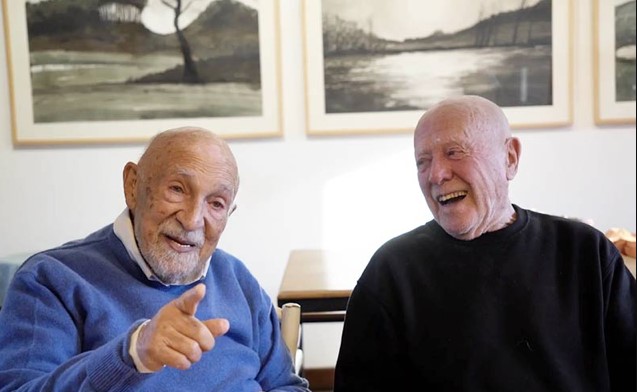
An important role in the documentary is also played by his “brother”, as Simon calls him: Koenraad, who asked Simon for forgiveness even though he came from a family that remained devoted to Nazism until the end of their lives – his father had enlisted in the SS, and his older brother was the guard who led Simon, his mother and his sister onto the train to Auschwitz.
Both are victims of the war, with memories that have followed them all their lives. We see Simon talking with schoolchildren about his ordeal, about fascism, democracy and freedom, and even about the present day, today’s migrants and the need for solidarity – in simple, beautiful scenes that move both the children and the audience, captured in fine images by cinematographer Xenofon Vardaros.
The film is a journey through the places that marked Simon’s life – from the former Dossin barracks in Mechelen, now a Holocaust museum, to his invitation by Woody Allen and his trip to the United States, where he played piano at the famous comedian’s jazz concert. It follows the accounts of both men, illustrated with superb drawings by Koenraad himself, who, besides drawing, turned to jazz – which, as he explains, helped him find his place in society.
These remarkable drawings bring the era to life, and through them we follow Simon’s dramatic journey: his childhood with his family in Brussels, the rise of fascism, his arrest together with his family, being locked in the wagon bound for Auschwitz, his escape and the whole ordeal that followed, until he managed to reach Brussels and go into hiding with the help of various people.
The review by Lambriana Kyriakou:
“Born Twice”: The memory of the Holocaust and the courage of forgiveness
Stelios Kouloglou’s documentary tells a story so overwhelming that it needs no dramatic embellishment.
Simon Gronowski was just eleven years old when he managed to jump from a train taking him to Auschwitz. That act gave him a second life, though it could not erase the loss and the trauma.
Decades later, he still plays jazz and talks to students about the Holocaust.
The most unexpected dimension of the story is his friendship with the son of a notorious Nazi, who has turned to the anti-fascist struggle.
This is where the real strength of the documentary lies. Forgiveness is presented neither as forgetting nor as absolving the guilty. It is a difficult human choice, one that does not cancel out historical memory.
At a time when historical revisionism and intolerance continue to trouble Europe, this story takes on particular relevance.